The Delta Drill Press Project
1955 Delta DP 17-600
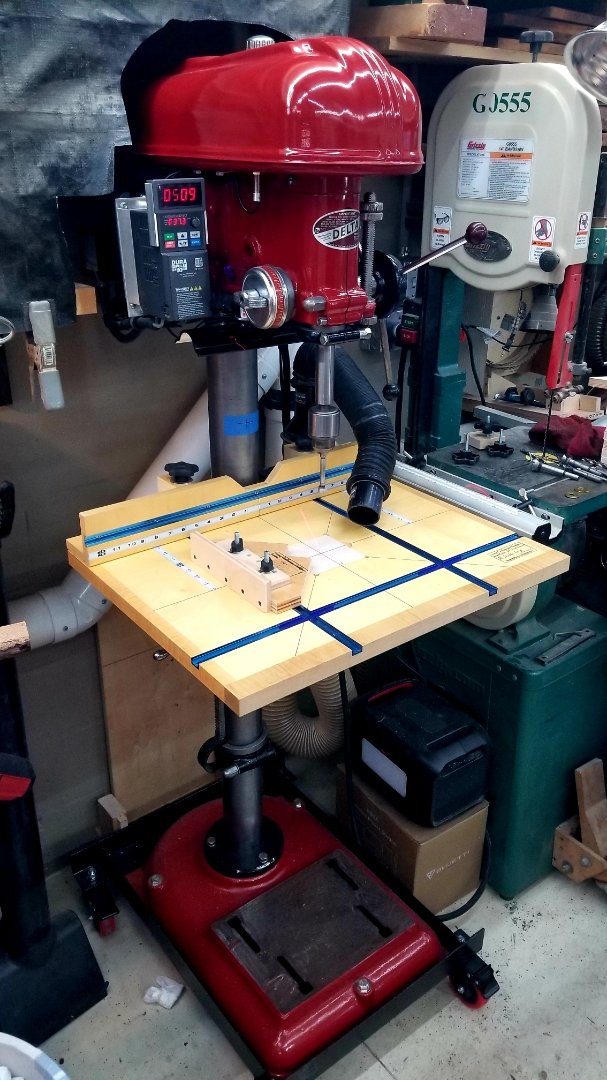
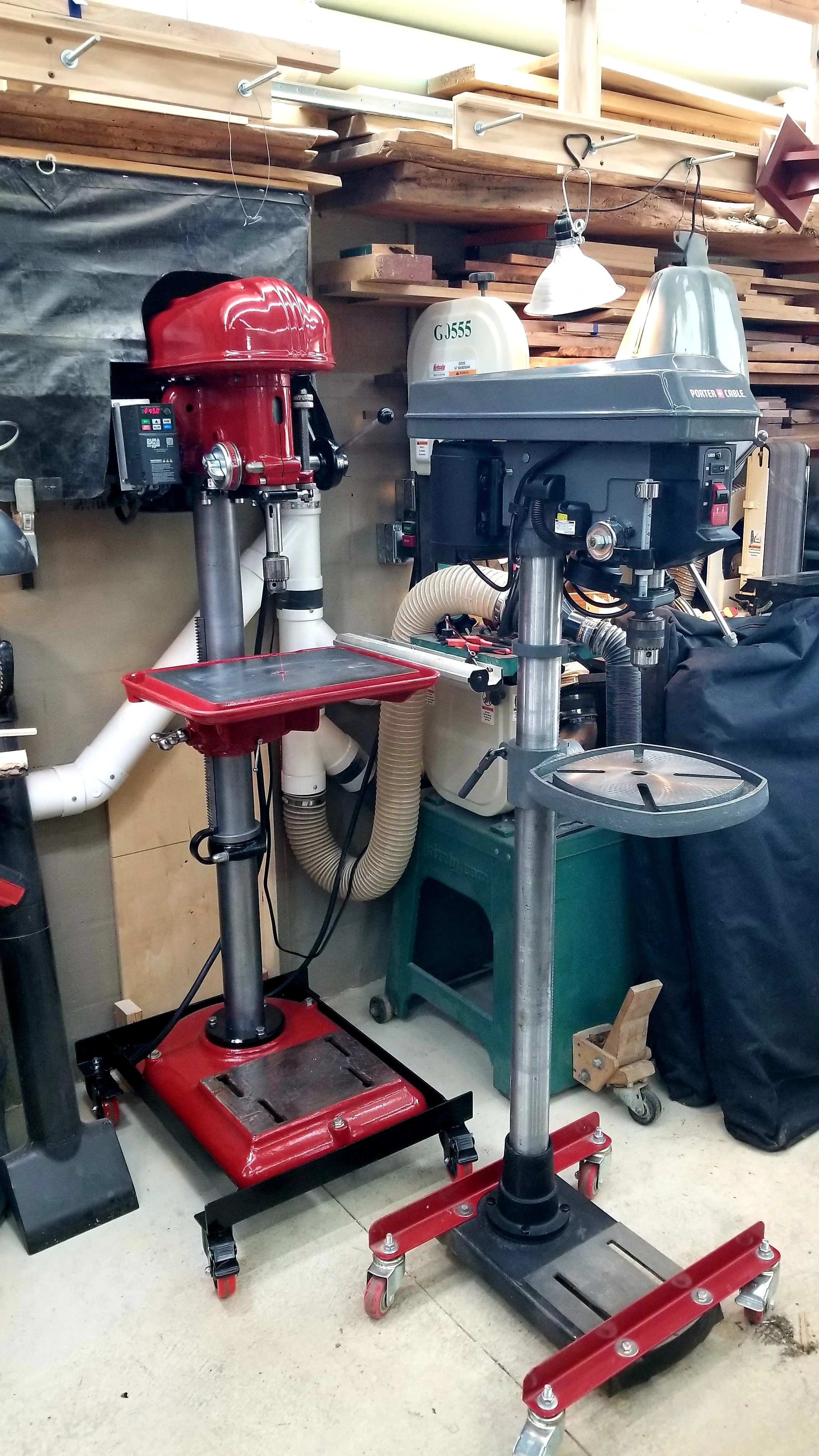
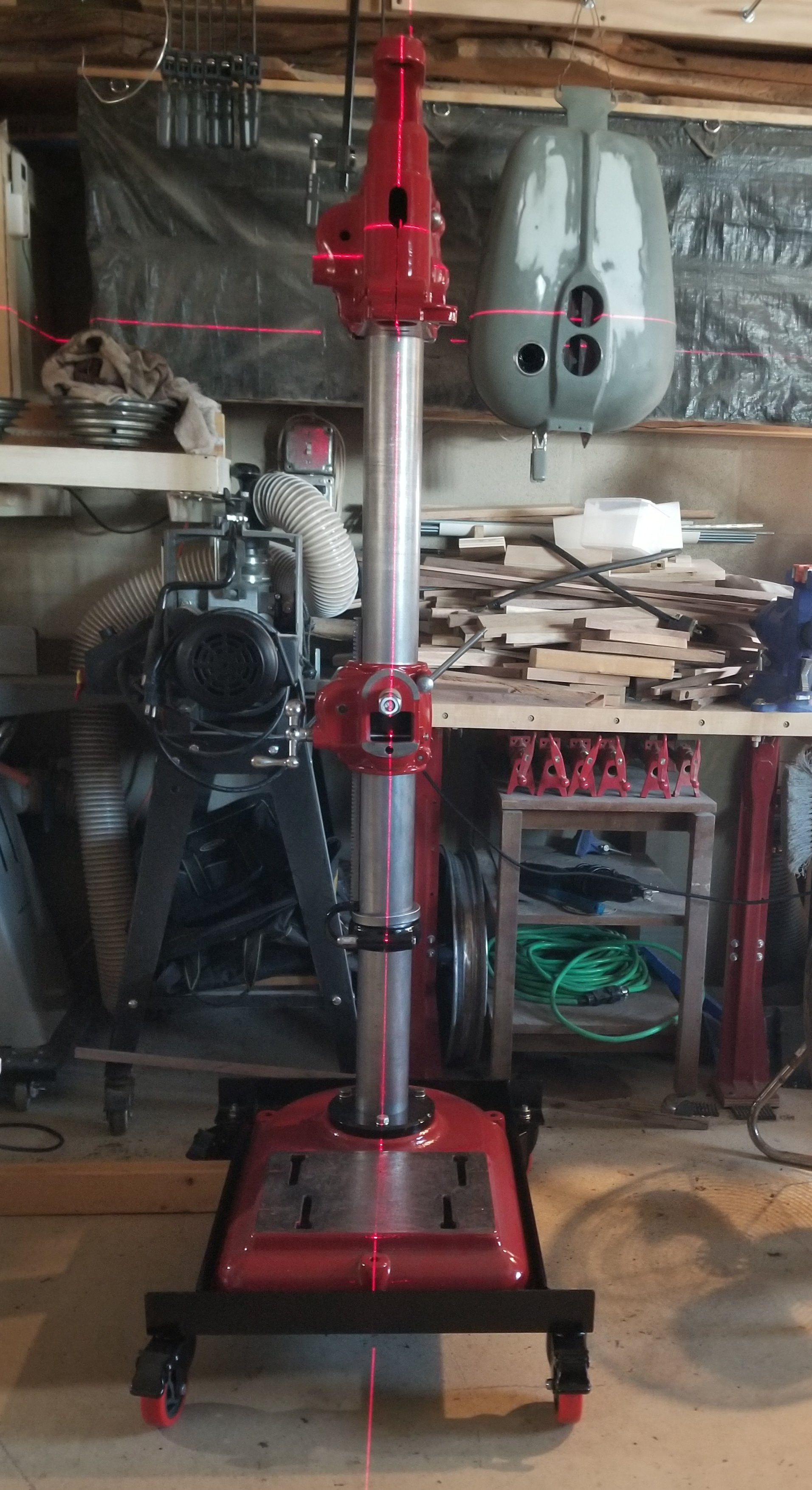
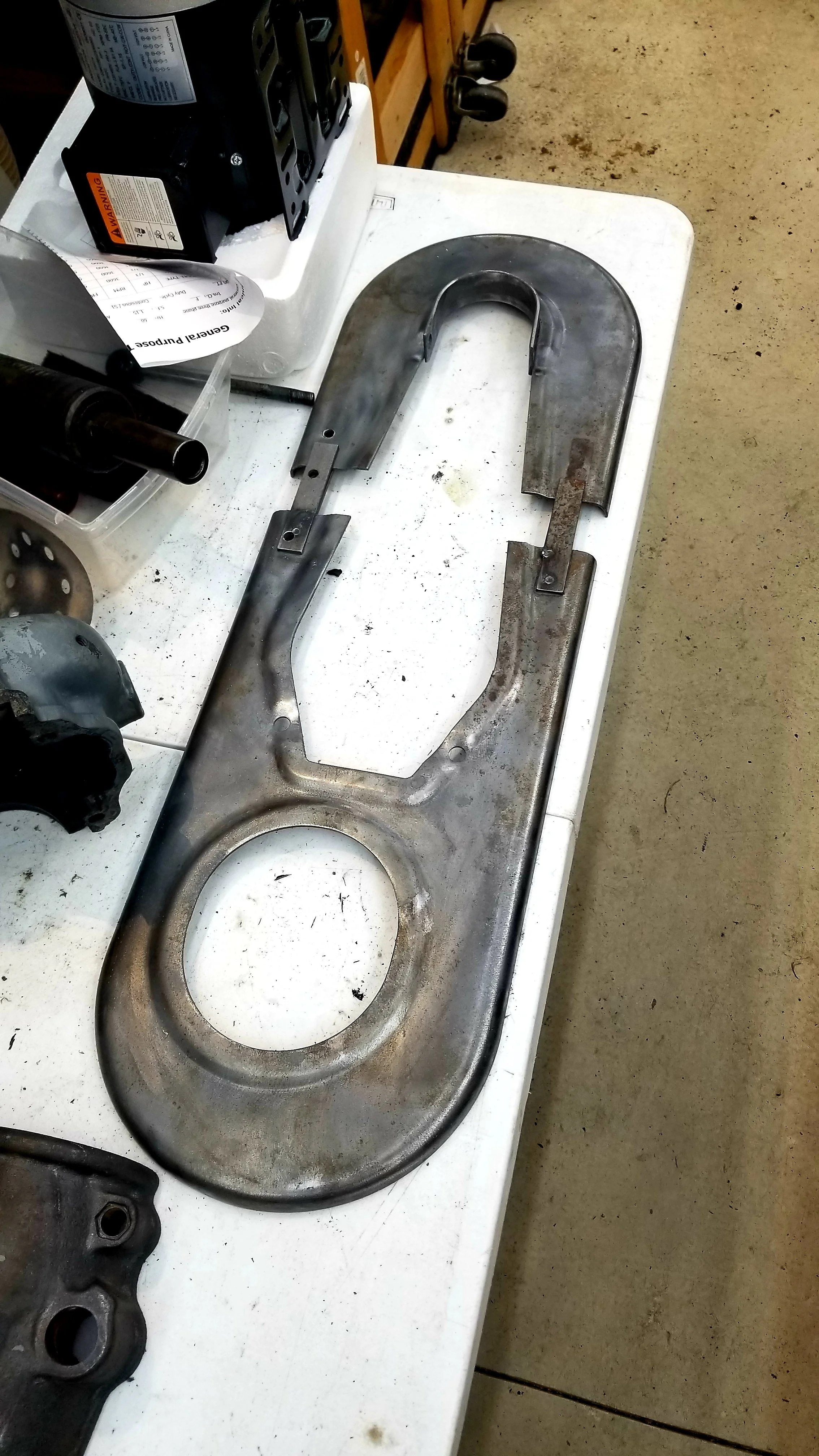
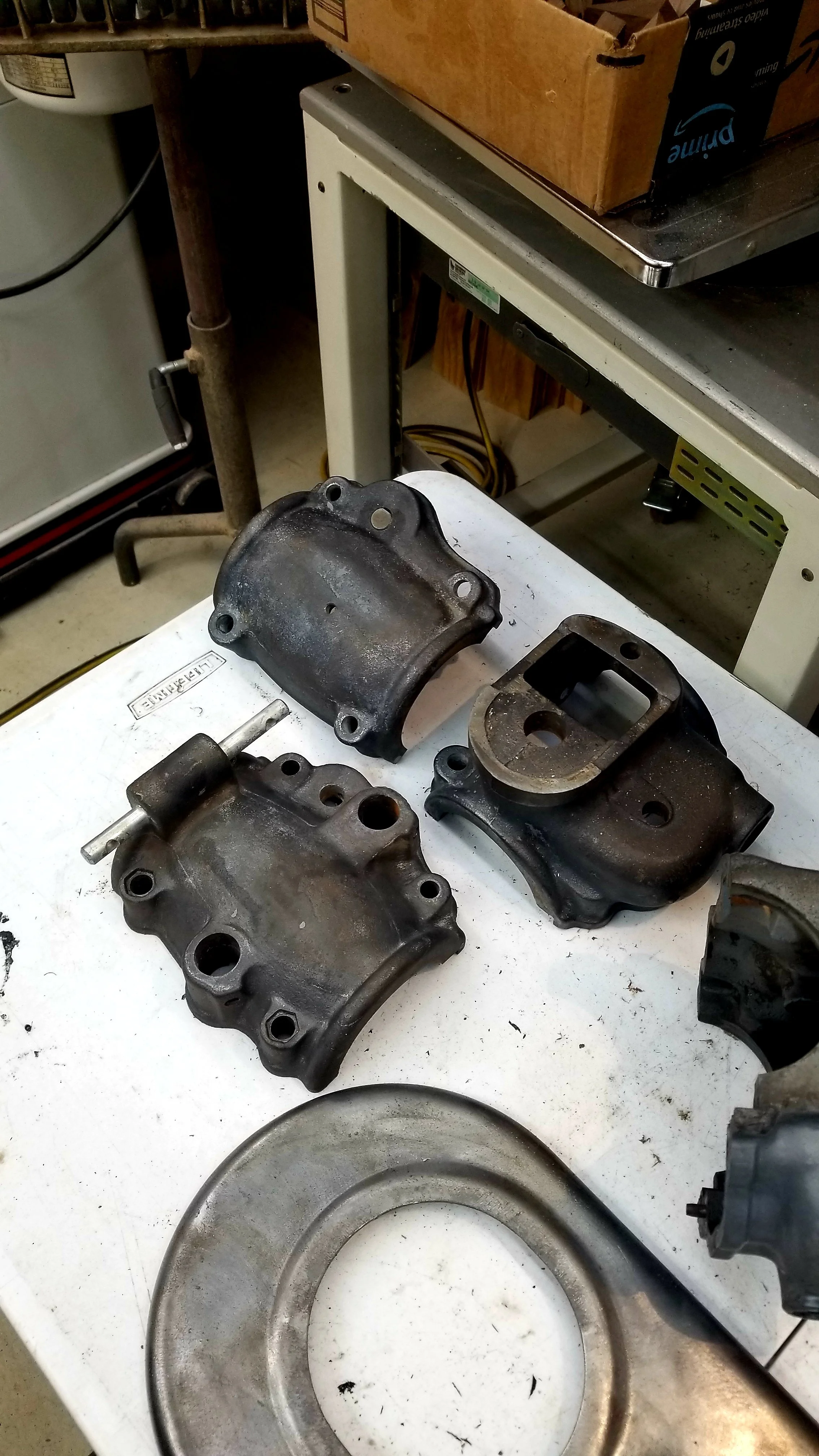
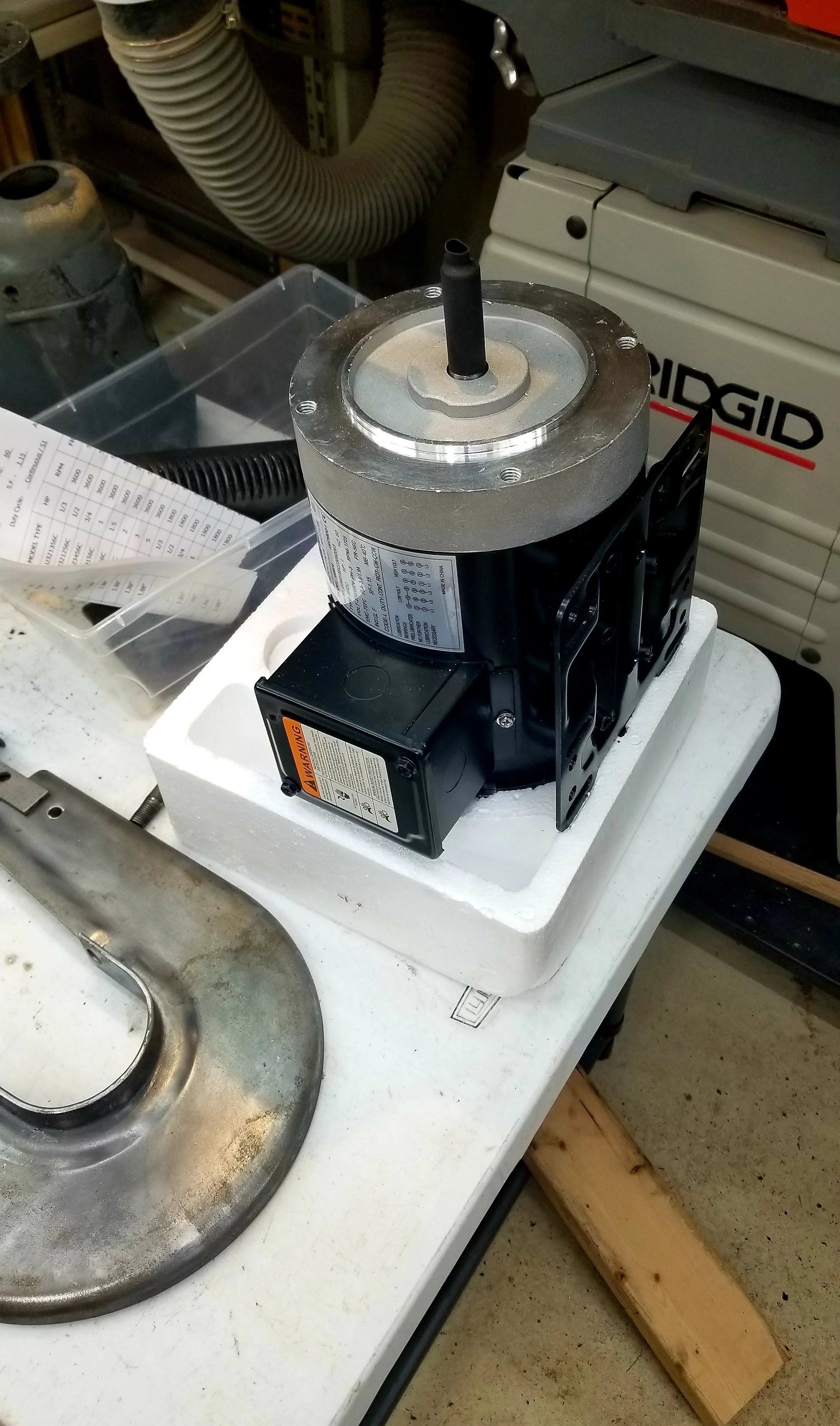
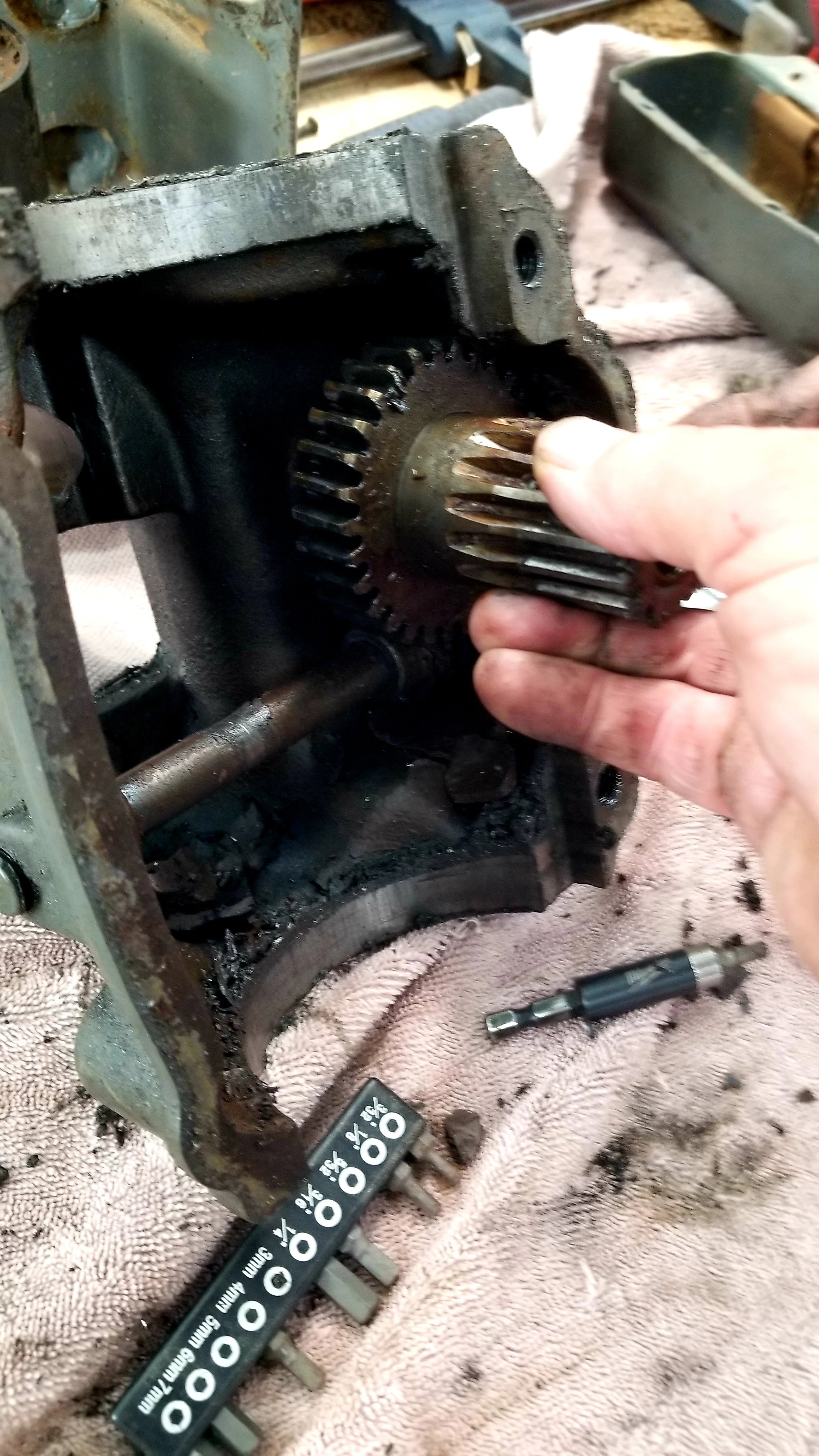
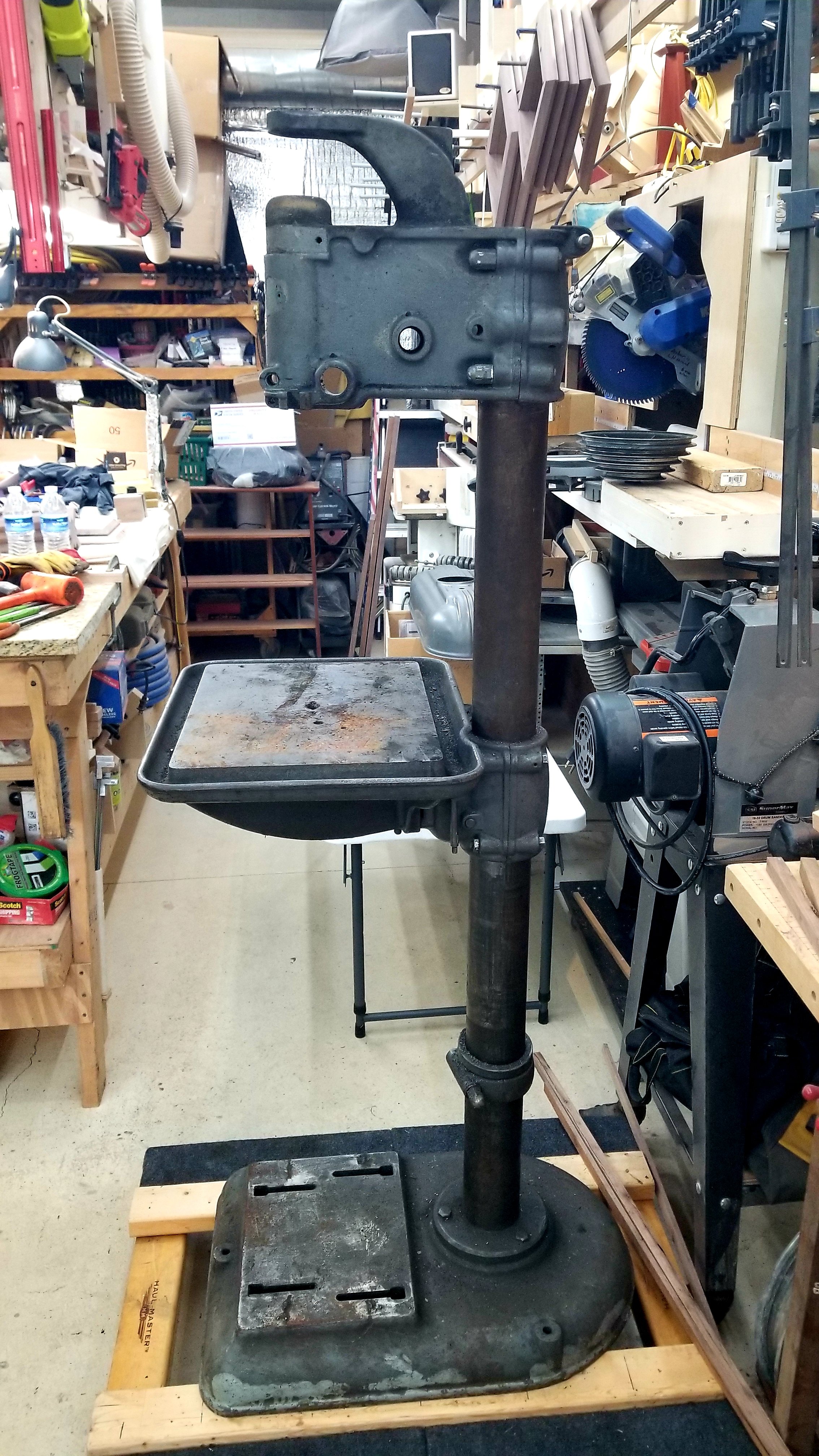
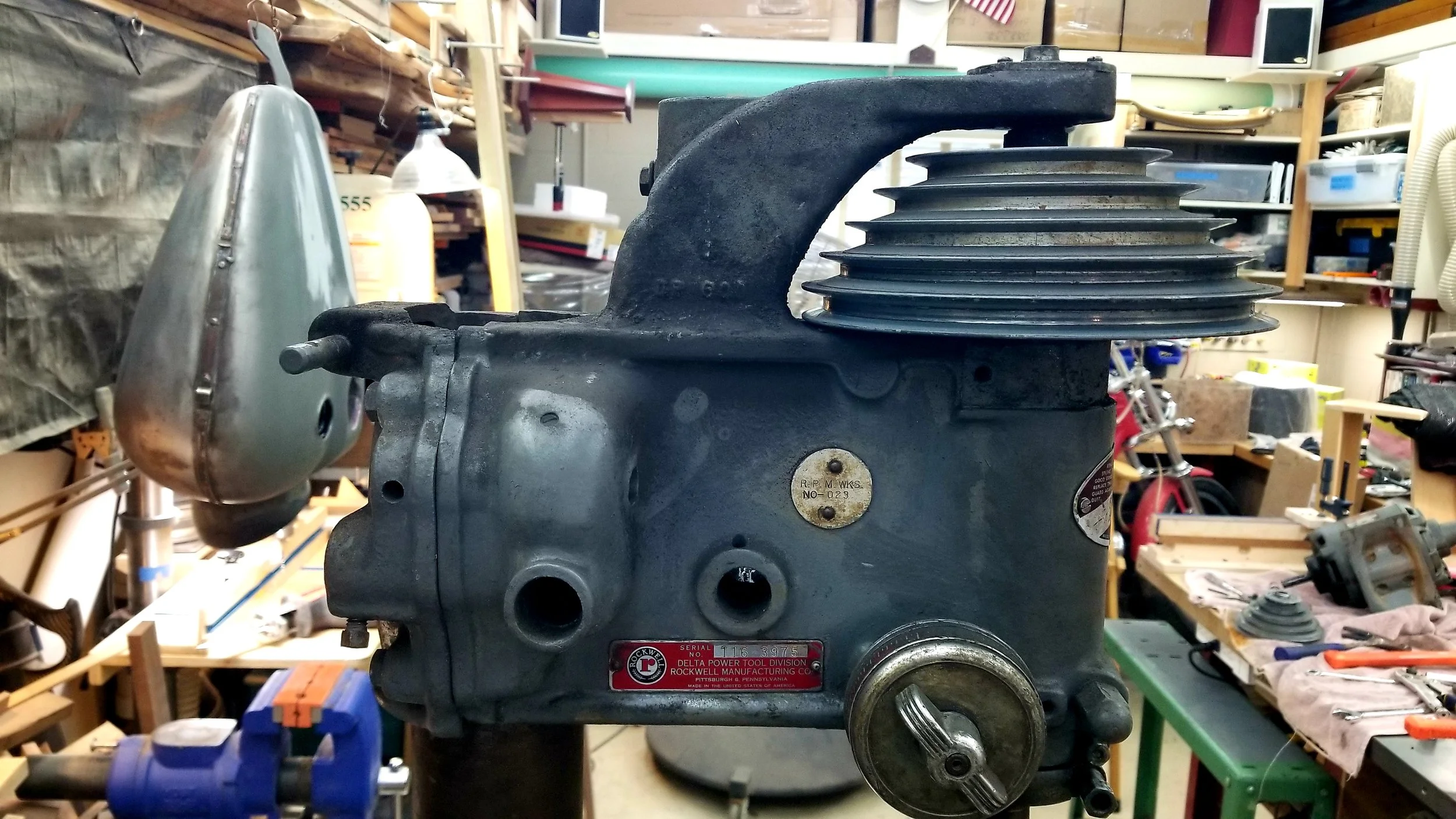
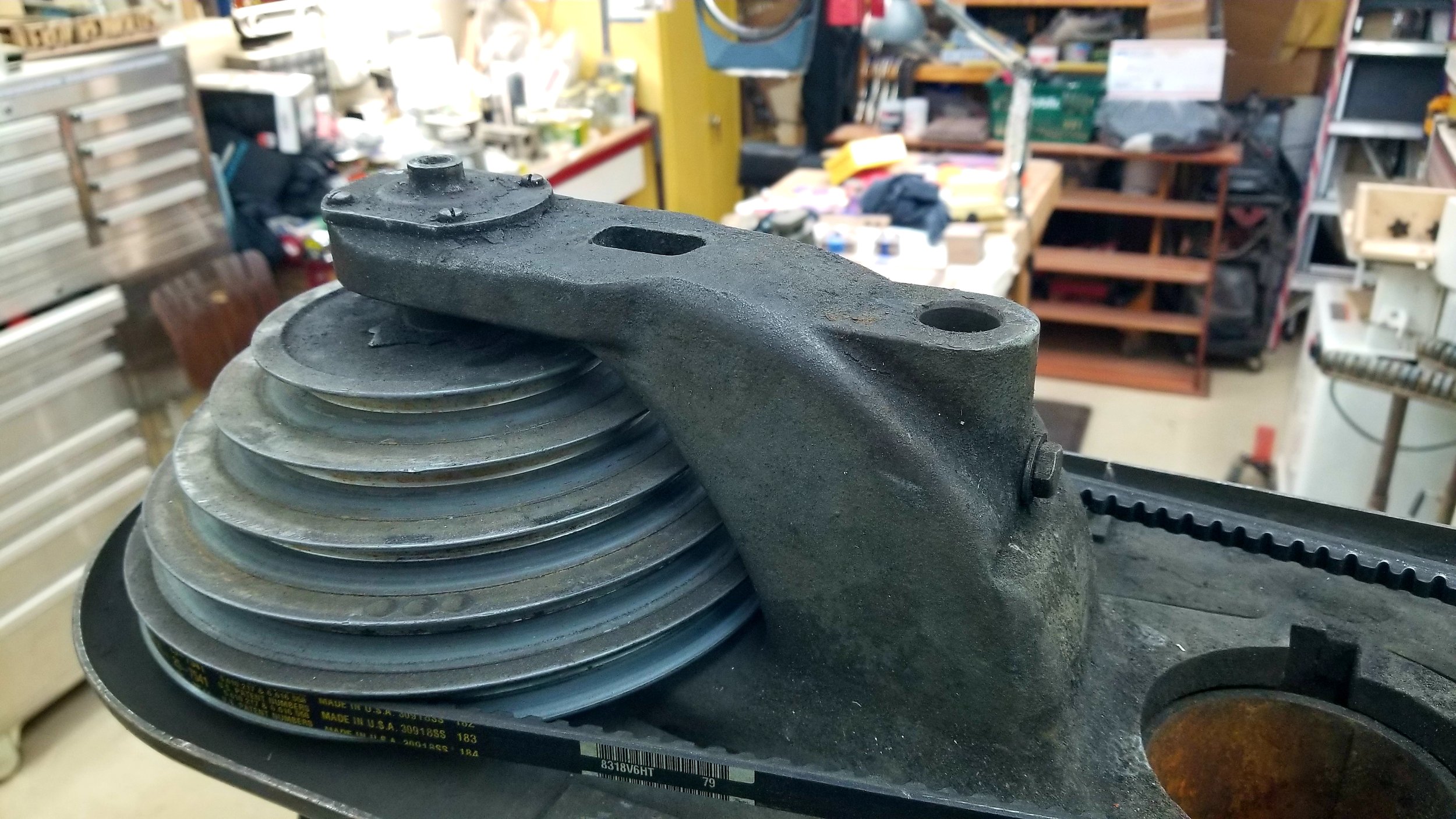
The Delta Project… This has been one of the most rewarding restoration efforts that I have done in a long time. For years I had been wanting to upgrade my drill press so I started searching for something new. Very quickly I realized that a new machine of the caliber that I wanted was going to be beyond my budget. That’s when I discovered the world of vintage machinery, and the people devoted to saving them. These enthusiasts are restoring, trading and swapping parts of machines from the heyday of American Manufacturing. All kinds of machines that were built so well that they are still usable or rebuildable after 85 years. Many were used during World War II to build the greatest force for democracy the world had ever seen. These epic machines hold so much history and significance that I wish they could talk. That’s when I knew that one of these magnificent machines was what I was looking for. But, which one?
Making the Choice… As I happily went down this rabbit hole I had many things to consider. I needed a machine that had larger capacity and more stability than my current floor size drill press, but it still had to be practical. I didn’t need a one ton milling machine (actually, I do but my current shop isn’t big enough), instead I needed a full size industrial drill press, but what brand? My father, who owned several wood related businesses, always bought Delta machines because he trusted their quality. So that was a start, as an “honor to him” thing. Also, Delta offered several sizes of machines from small “home owner benchtop” models, to full sized, standing industrial floor models. I even found multiple headed units with 2, 3 or 4 heads mounted to large oil bath tables for machine shop production. Finally, Delta had large production numbers for many years, going way back to the late 1930’s, so finding a machine and spare parts would be easier.
The answer ended up being their DP 17-600 model, a 400lb cast iron behemoth with a 17 inch swing and 5 inch stroke and arguably the finest drill press ever made. Perfect! Now, how to find one?
The Quest…When researching, I discovered a forum called Old Woodworking Machines (https://owwm.org/index.php). These guys live and breathe this stuff, I ended up joining the group in order to see their classifieds and to get advice from people who already know what they’re doing. They scour the country looking at auction houses and shops who offer these machines to sell. Many times machine shops and wood shops finally let these vintage machines go when they want to upgrade or when they go out of business. So, these amazing machines are available but you have to search. One of the guys on the forum rebuilds various machines in his spare time and actually sells them at good prices. He does a really good job and his stuff sells quick. I was ready to drive to Michigan (from Florida!) to get his latest, which happened to be a 17-600, but it was already gone. When I spoke to him he gave me a few names of people who may have some early Deltas available but not necessarily in refurbished condition.
This is how I came to know a man named Alan in Virginia (for his contact info, please email me). Alan’s life passion has been about these old machines. He still works part time as a machinist but spends most of his time finding and gathering these amazing pieces of history. I bought one of the three 17-600’s he had stashed around one of his properties. My son and I drove to Virginia to get it, and brought it home to begin the effort.
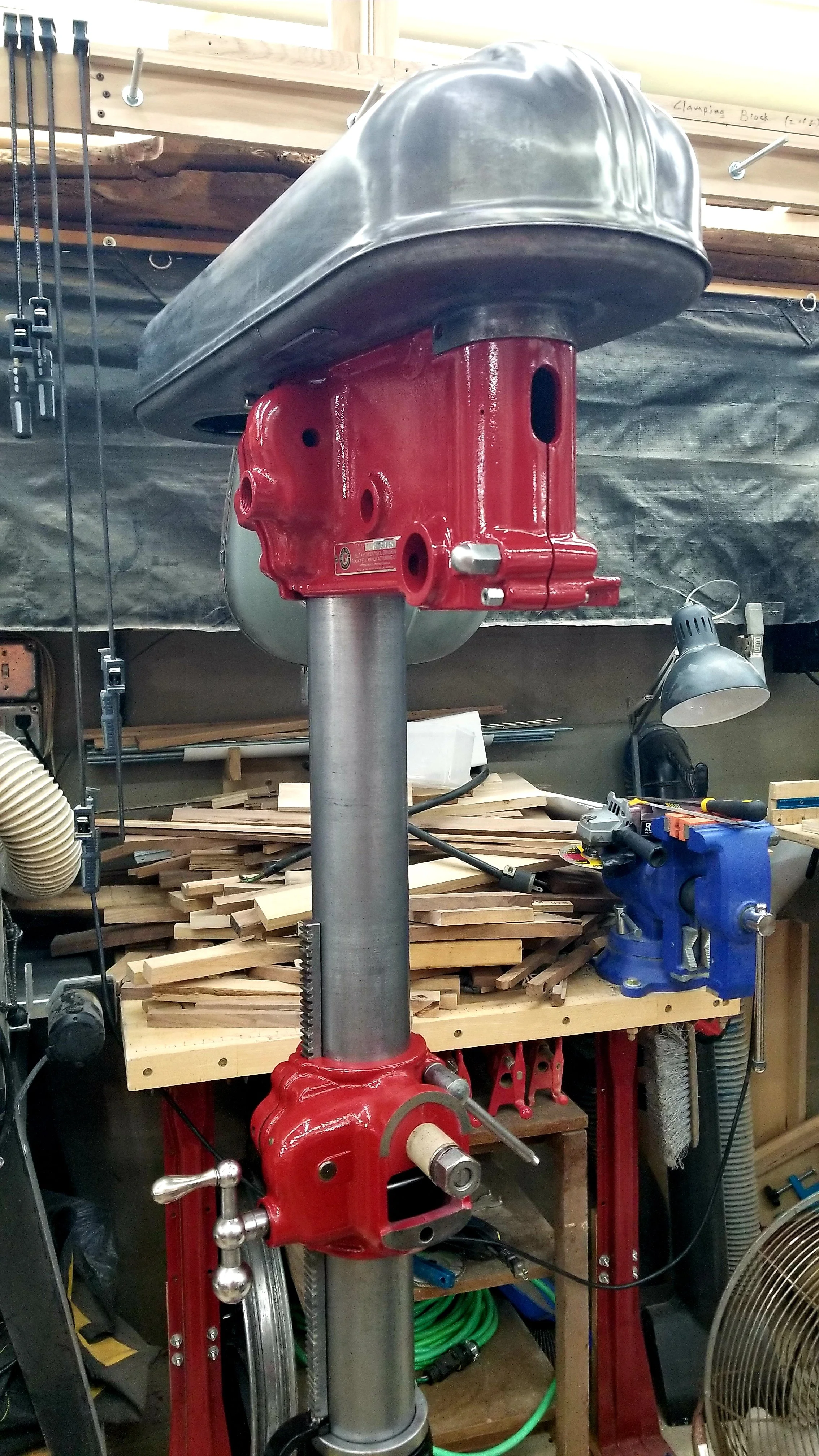
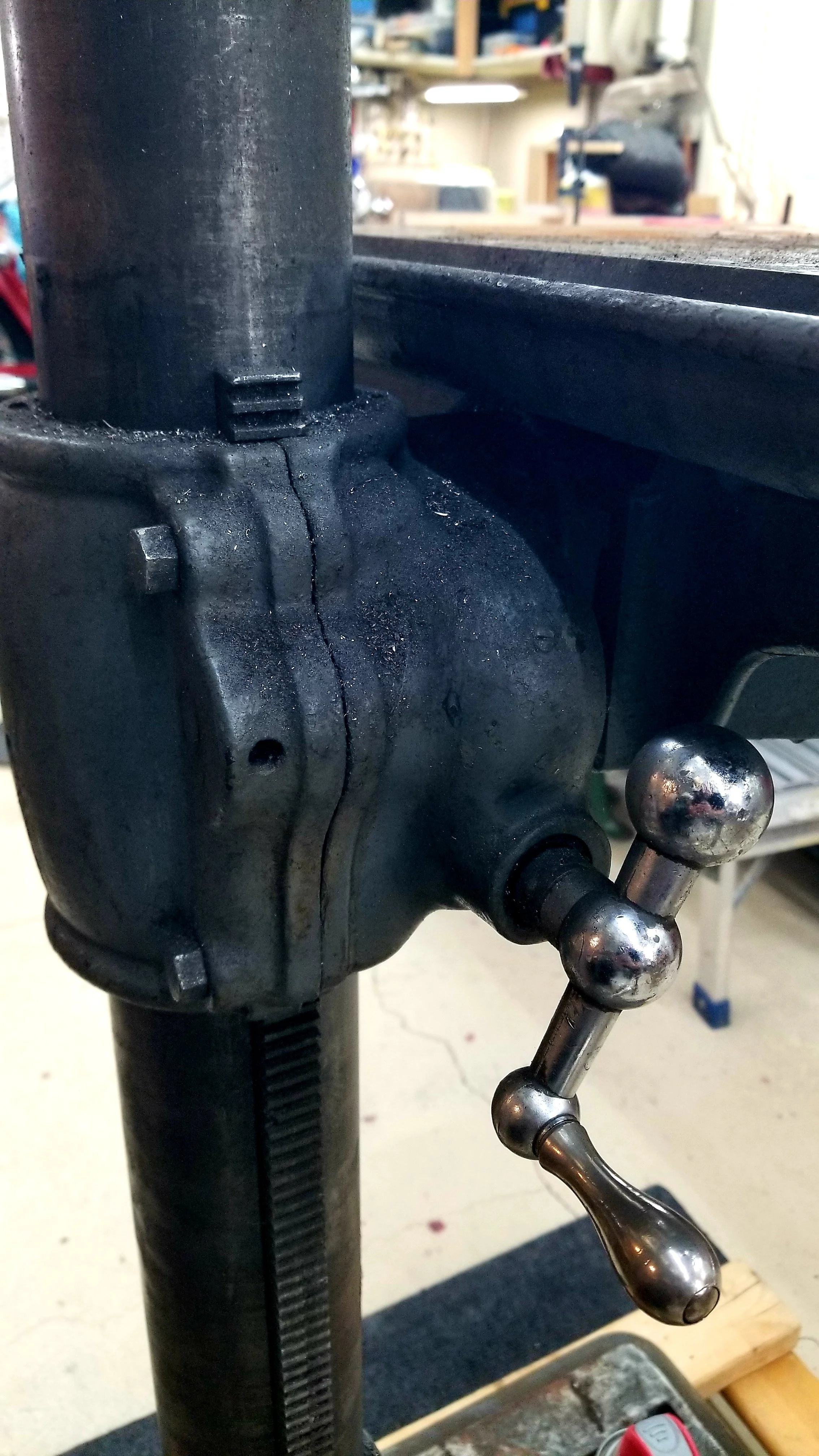
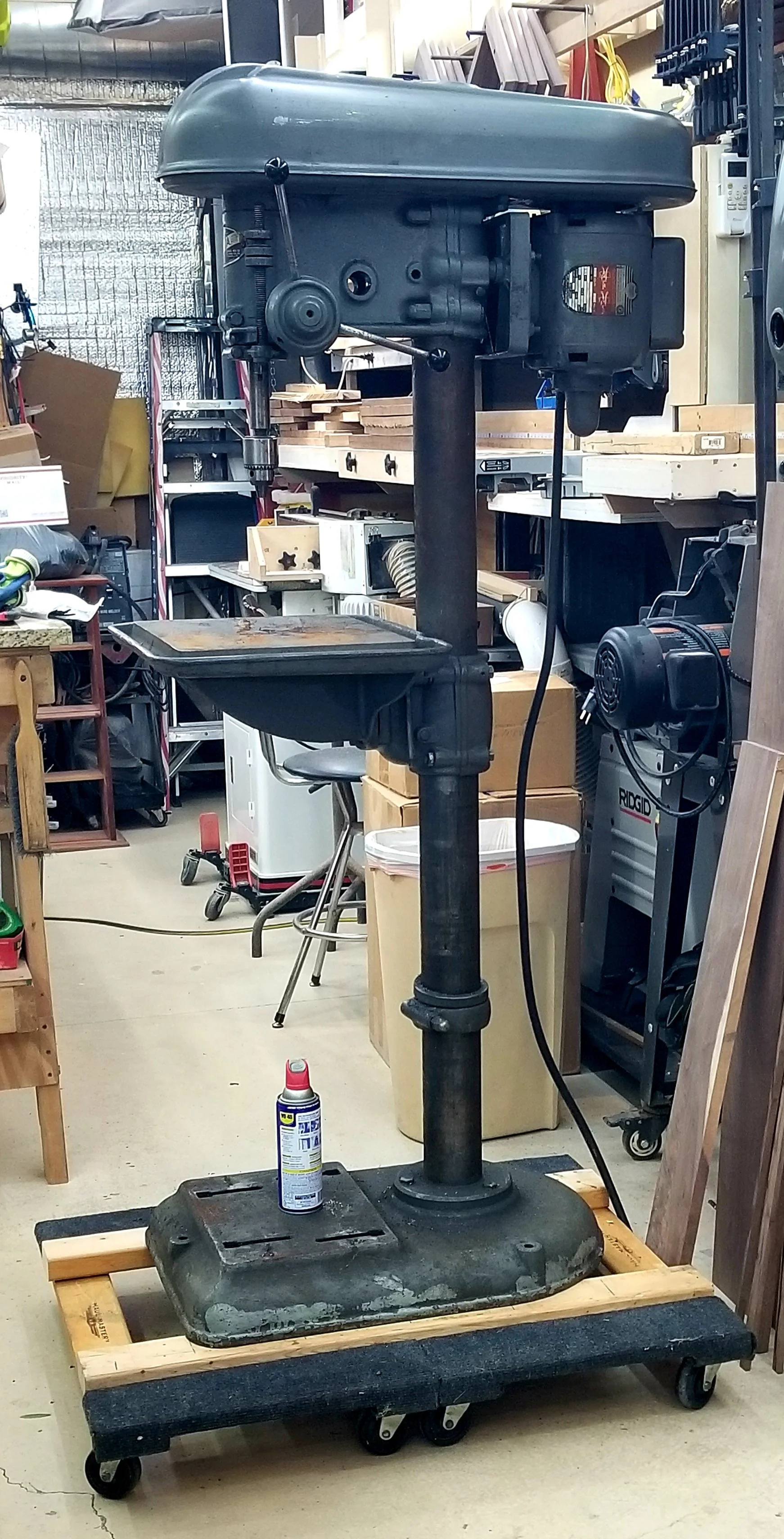
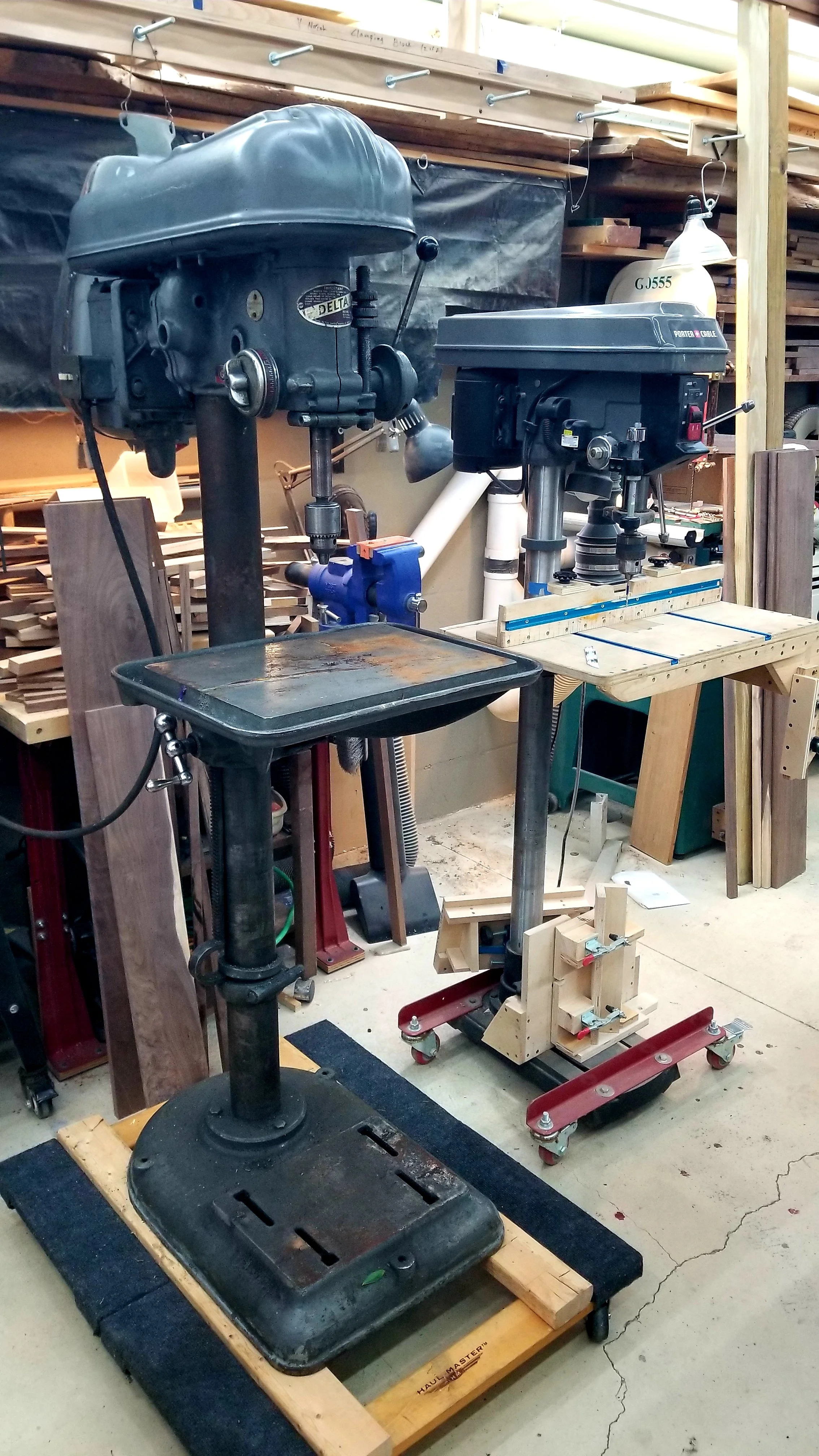
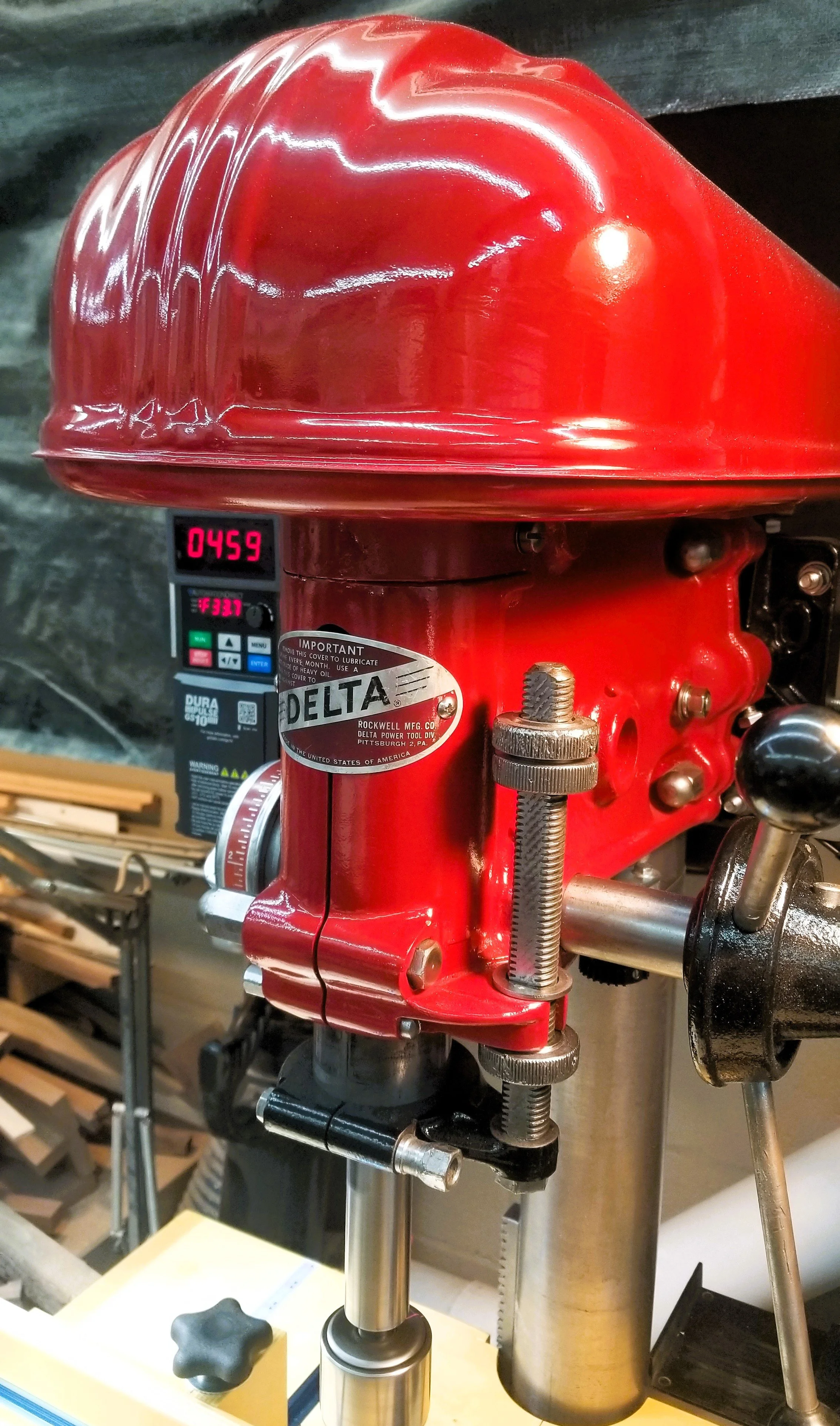
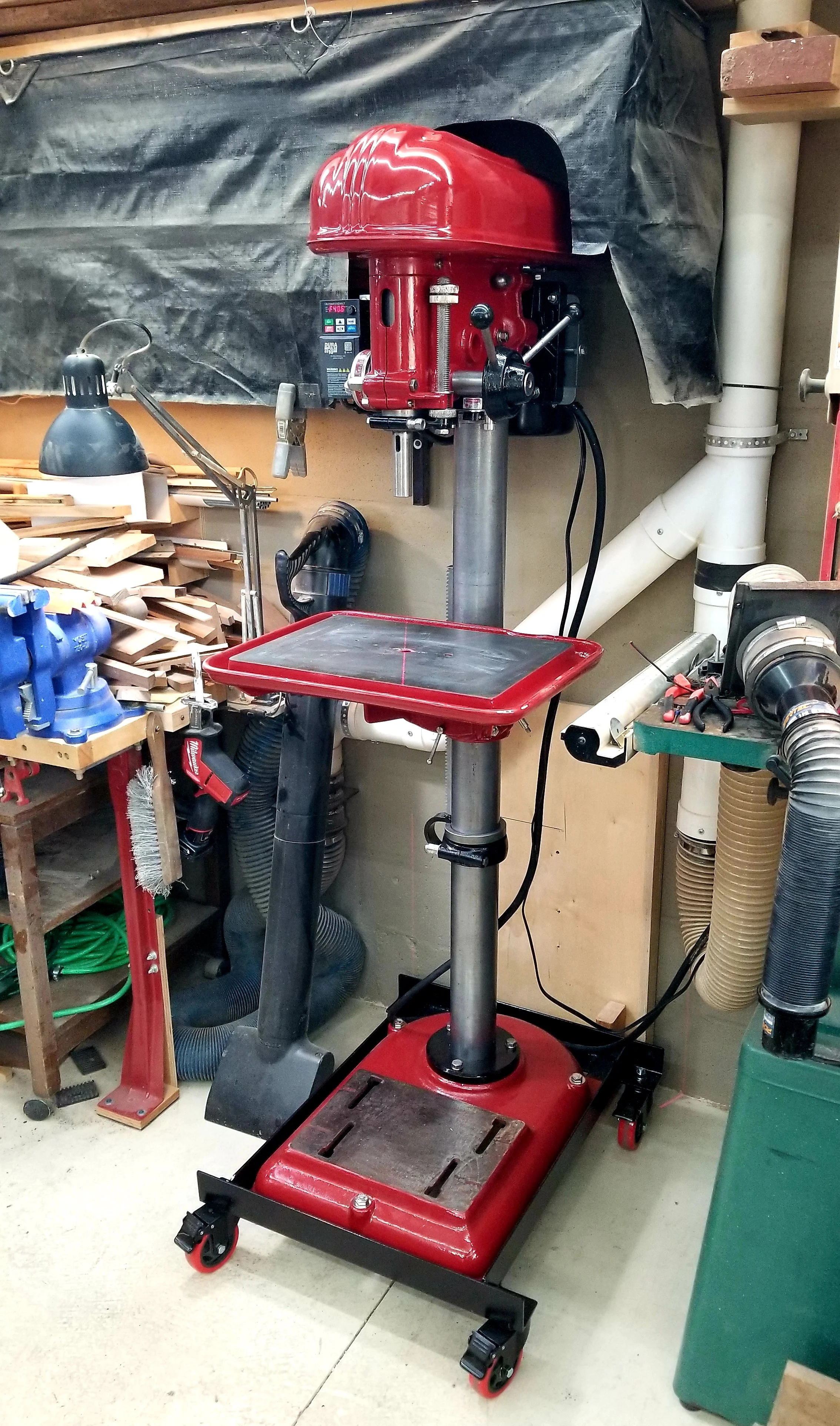
Disassembly… Delta DP 17-600 #116-3975 was built by Rockwell Manufacturing in Pittsburgh, PA in 1955. Alan bought it at an auction along with another 17-600 from a machine shop. They told him it had been working until a few years ago and they had owned it forever. This machine had seen continuous work for close to 70 years and obviously been maintained but was tired and dirty. It was layered with grime, a semi-hard mixture of grease and metal shavings that the forum guys call sludge. After scraping off as much as possible, I started removing major components and bagging and labeling the smaller parts. The goal was to get down to the individual castings for major cleaning and a repaint. Degreasing, stripping and grinding off the old paint took almost a week and you have to wear a mask because this old paint usually contains lead. If I were doing it again, I would definitely set up a sand blasting operation. The castings are amazingly stout but occasionally there can be cracks in machines this old, fortunately mine was undamaged. After much deliberation and votes from family and visitors to the shop, I decided to change the color. Originally this machine was a medium to light industrial gray. But because this was not a true restoration and more of a resto-mod, I went with Regal Red, a standard Rustoleum color already on the other equipment in my shop. Everyone who has seen it, loves the color and I’m glad I went with it.
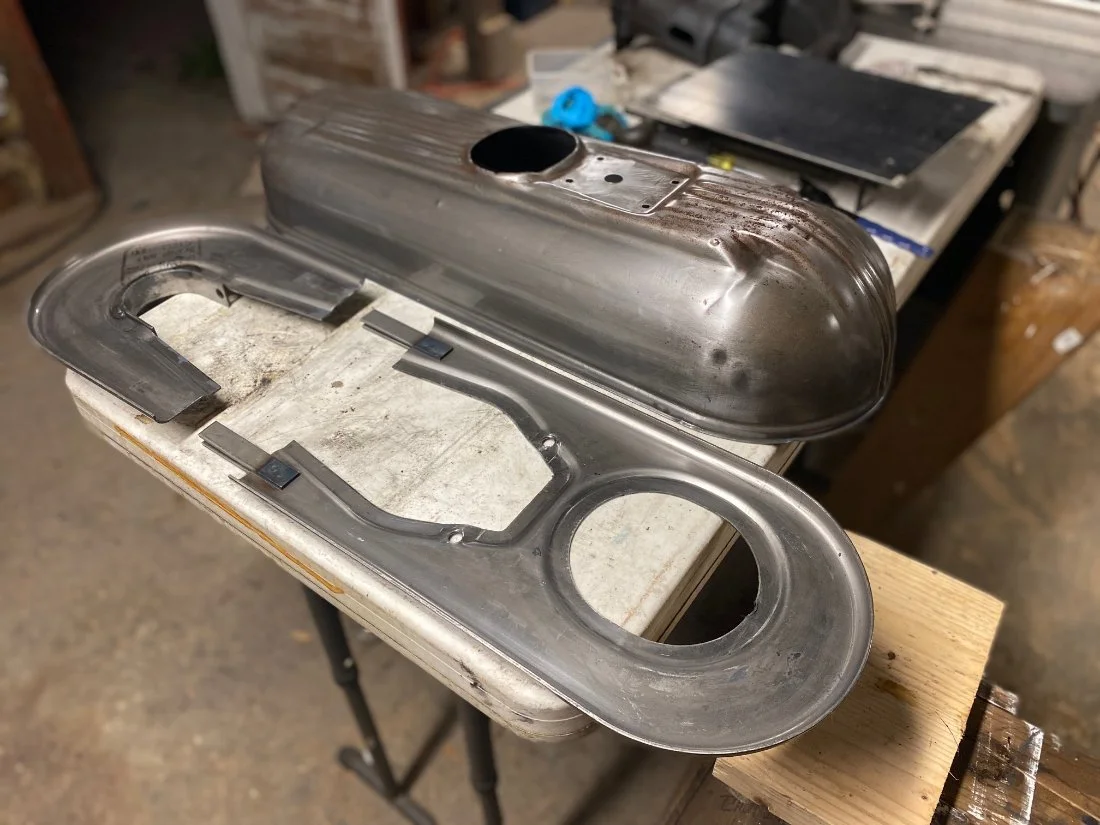
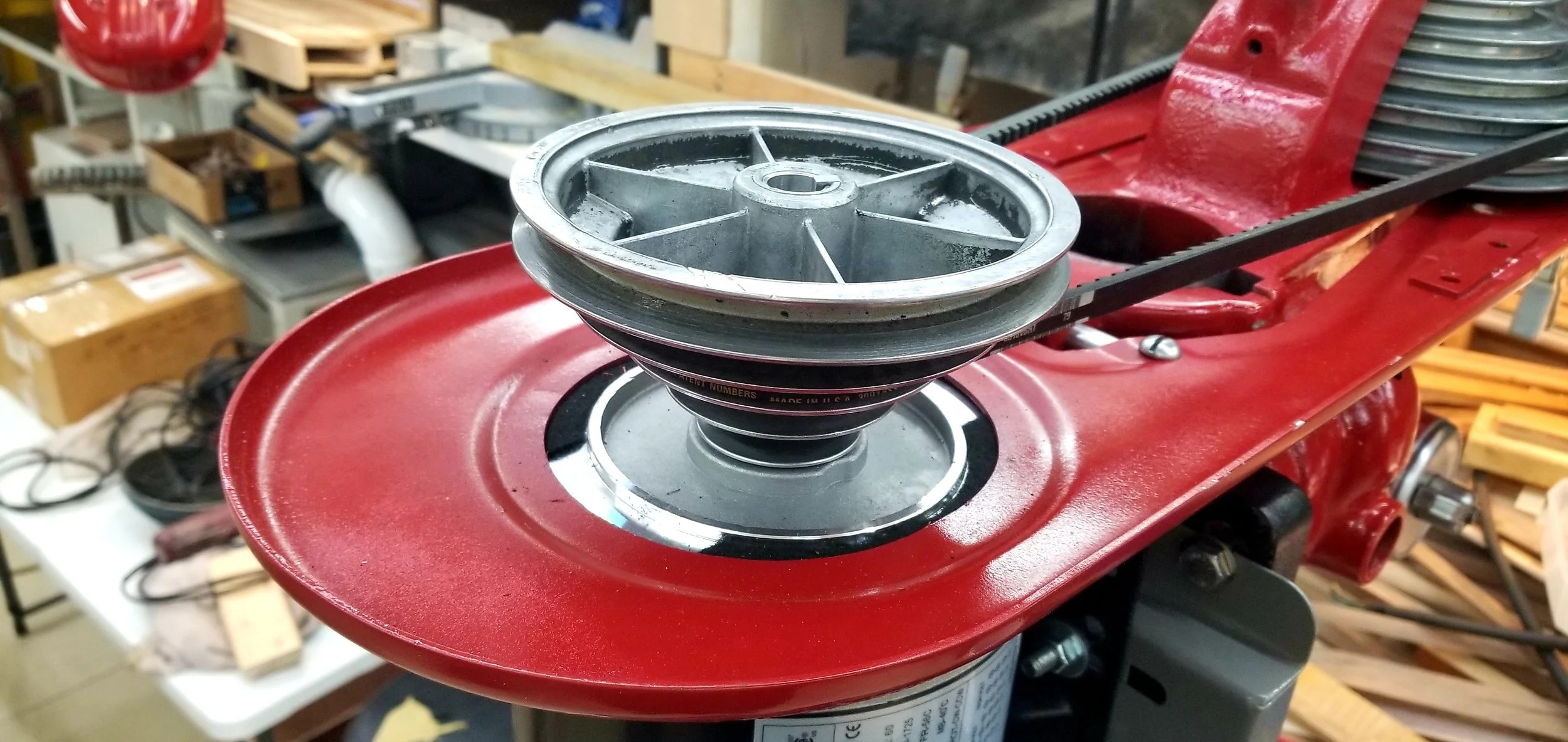
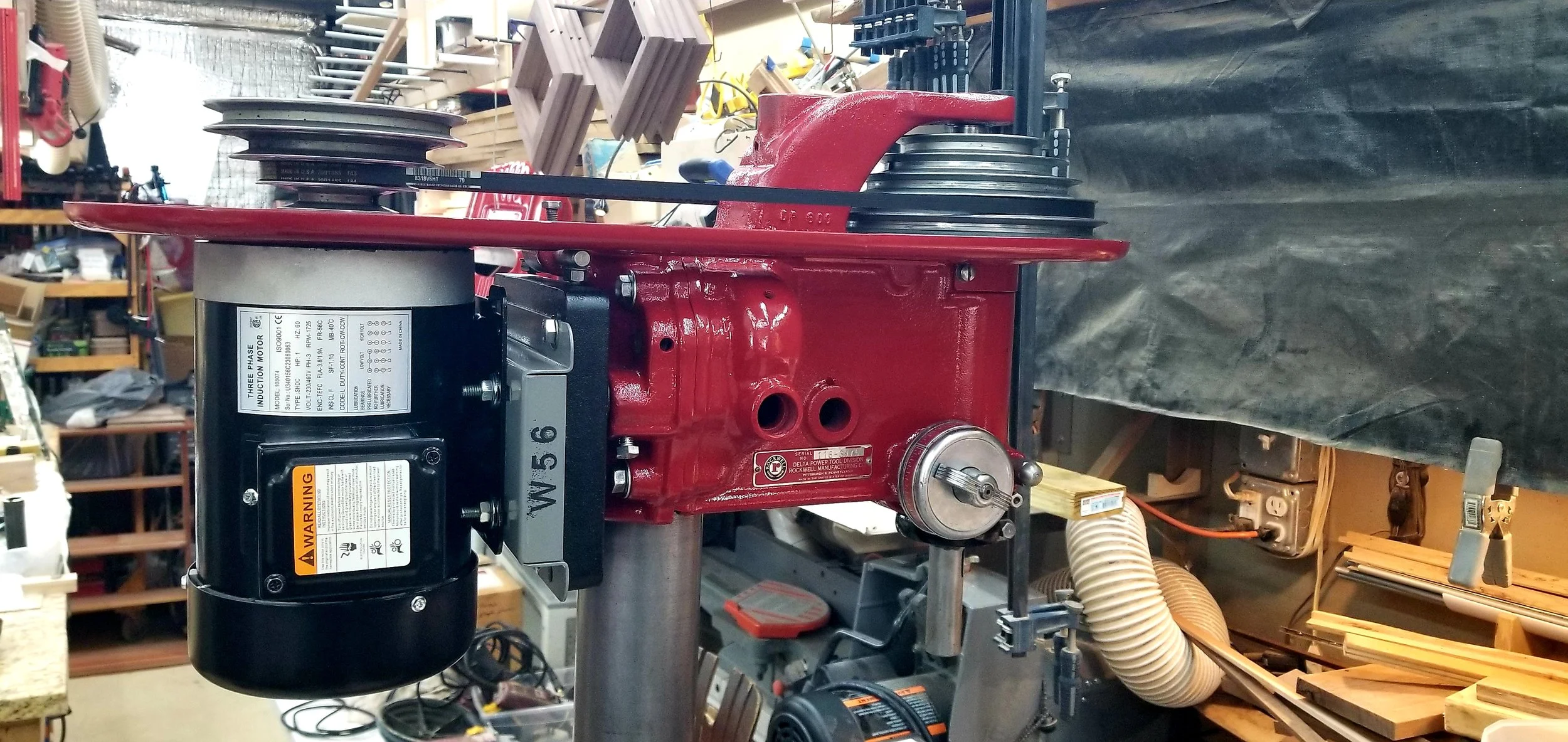
Massive internal components were astounding, large hardened gears and splined shafts were covered in dried grease but in perfect condition once cleaned, amazing after so many years of hard use. The large quill still had smooth movement and just needed cleaning, lube and a small adjustment. I did end up replacing more parts than initially expected. Both aluminum belt pulleys needed to go, they were loose on their shafts after too many times of bits getting locked up on work pieces and damaging them. Plus I wanted to replace the motor pulley for a “Slow speed” unit, more appropriate speeds for woodworking than for machining steel. The only bearing that needed replacement was the one on top of the front pulley. In the pictures you can see the massive support casting that goes up over the this pulley, it has a bearing to hold the top of the upper quill spline shaft. The other internal spline shaft bearings were all tight and smooth, probably replaced in the past 20 years or so. I did replace several smaller parts due to normal wear, and put on a new return spring for the quill.
Upgrades… This was my favorite part. Let’s take a vintage machine, large and overbuilt, and give it a modern heart transplant. I had seen variable speed machines before, some of the newest drill presses feature direct drive (instead of belt driven) and variable speed motors. Plus, the guys and gals on the forum were updating many of their machines to VFD for more convenience and adjustability. I had planned to do this a some point in the future but when I took apart the original motor on this Delta to rebuild it with new bearings and brushes, the internal wiring just disintegrated. I knew it was time to do it right the first time.
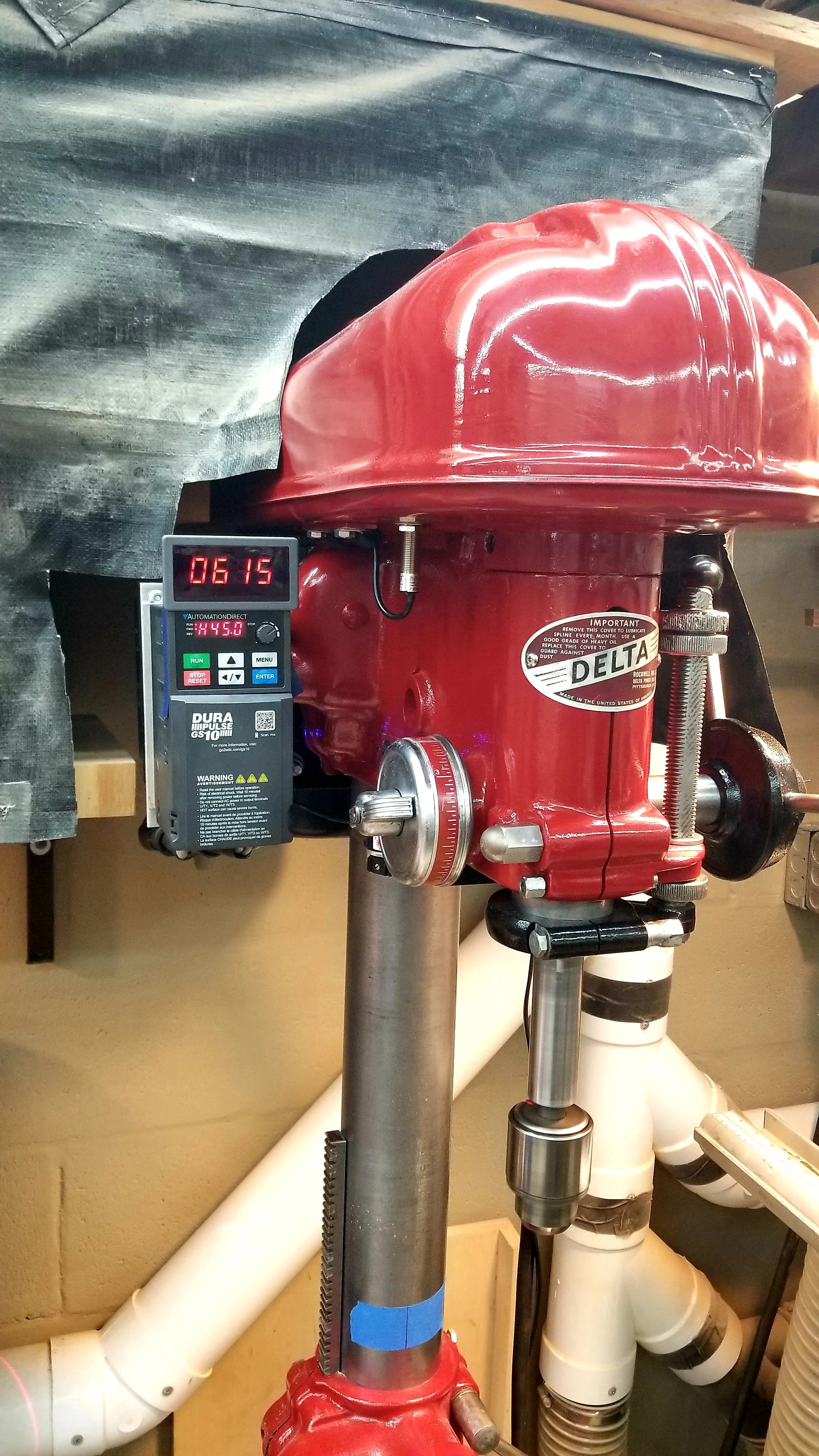
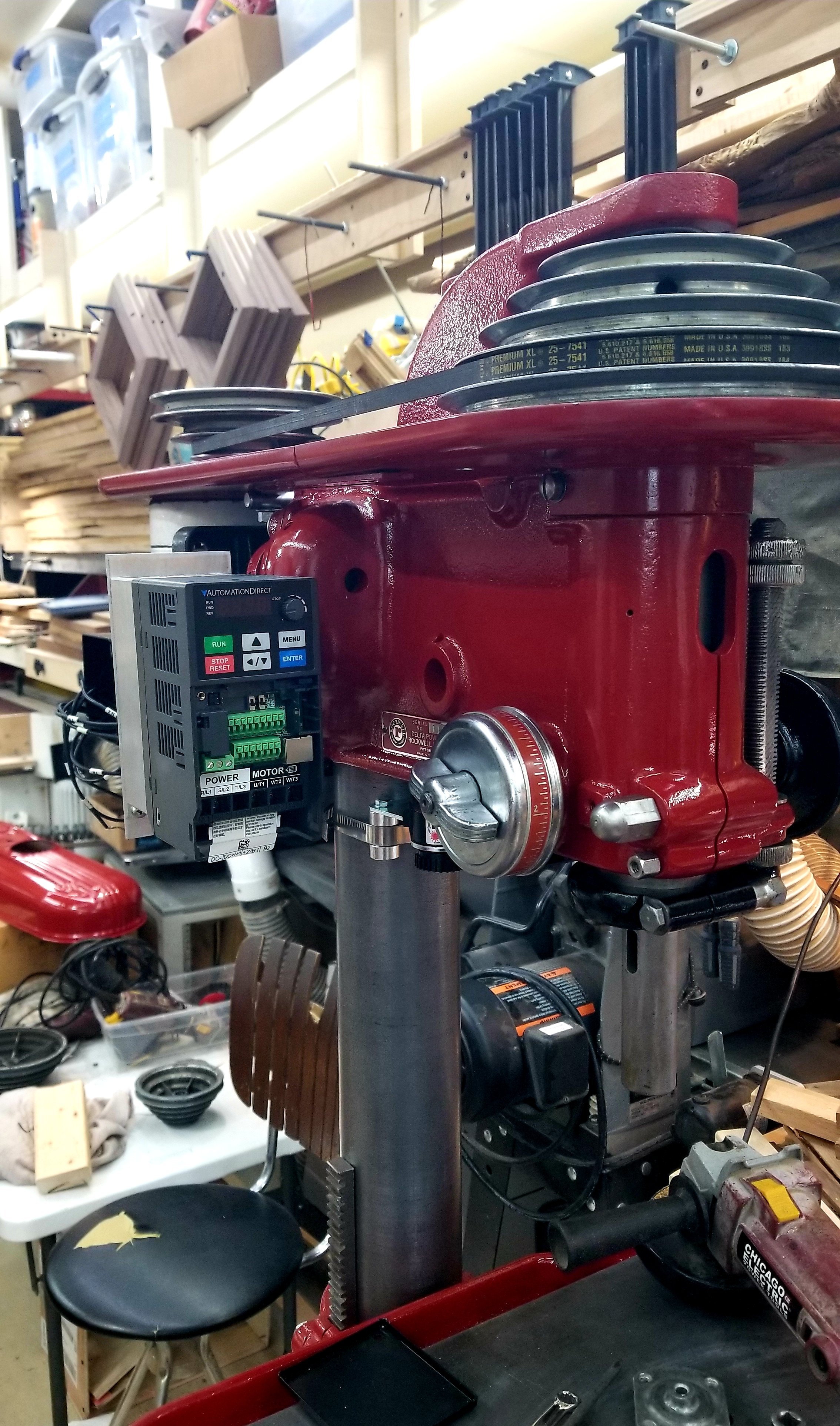
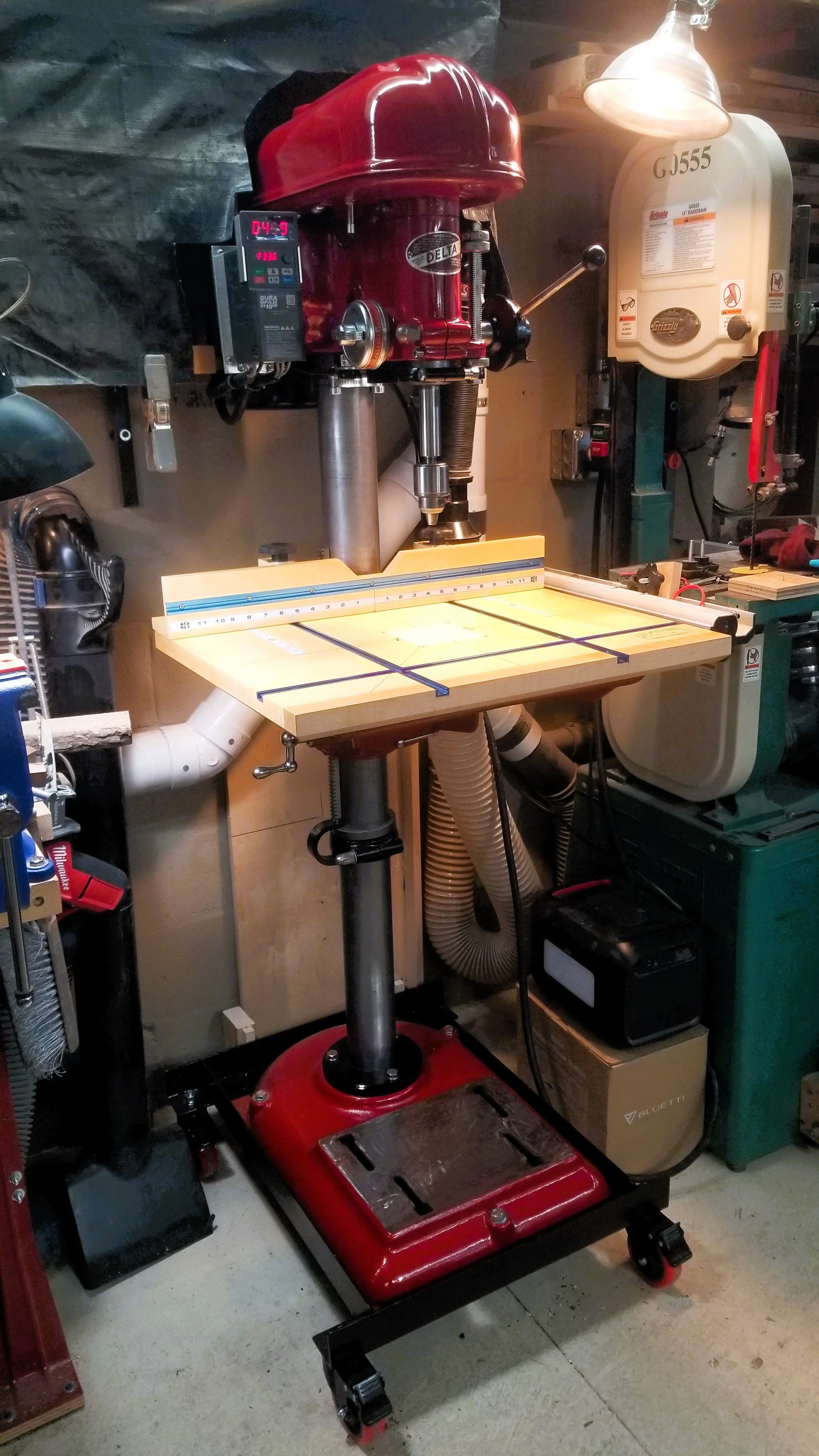
VFD Variable Frequency Drive… I used input from the forum to find a good option for the controller to do this upgrade and was directed to Automation Direct (https://www.automationdirect.com/adc/home/home) . I ordered their “DURApulse GS10 series AC micro drive” to control the new 1hp 240v 3 phase motor that I got on sale from Amazon. This new motor had a slightly smaller shaft diameter than the original but an adaptor sleeve was available that made it compatible with the pulley. The hardest part of this upgrade was getting the motor mounted in the correct location. A variety of motor mounts are available to adapt motors to base plates that allow adjustability, but none would fit the old Delta. I ended up drilling holes in the old baseplate to align with the new adapter and modifying it so it so the old base would have the range of movement to allow the belt to be taken on and off. Next I had to fabricate a mount for the controller on the left side of the head unit. I used a large hole that extends left to right through the casting that would normally support a power unit that drives the quill up and down in industrial applications. Spacers and large bolt connect to a plate on the left that holds the VFD, tachometer and 120v power strip for the lights and laser guide.
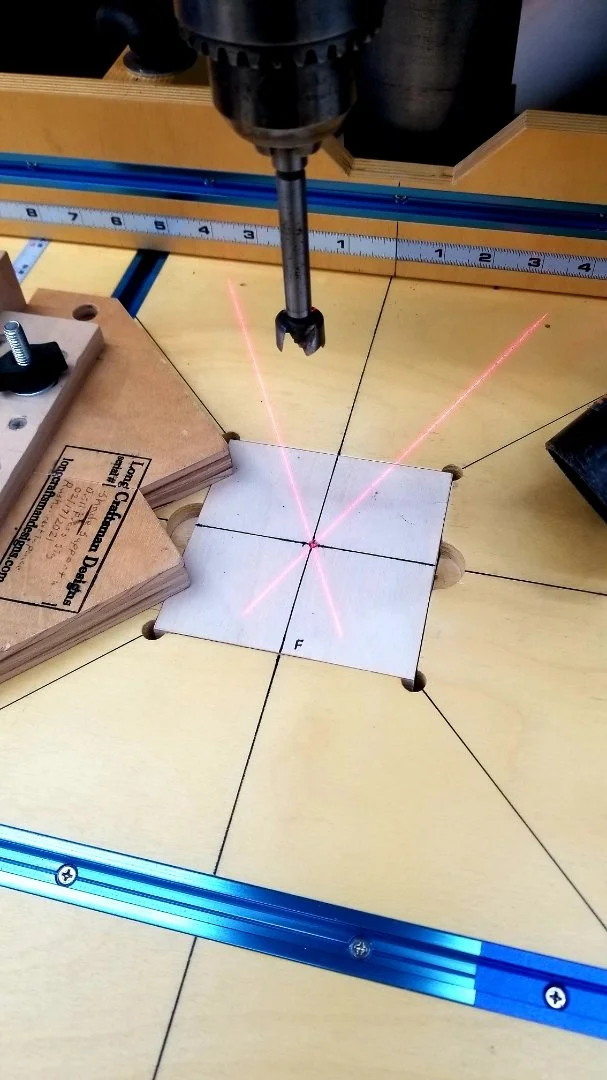
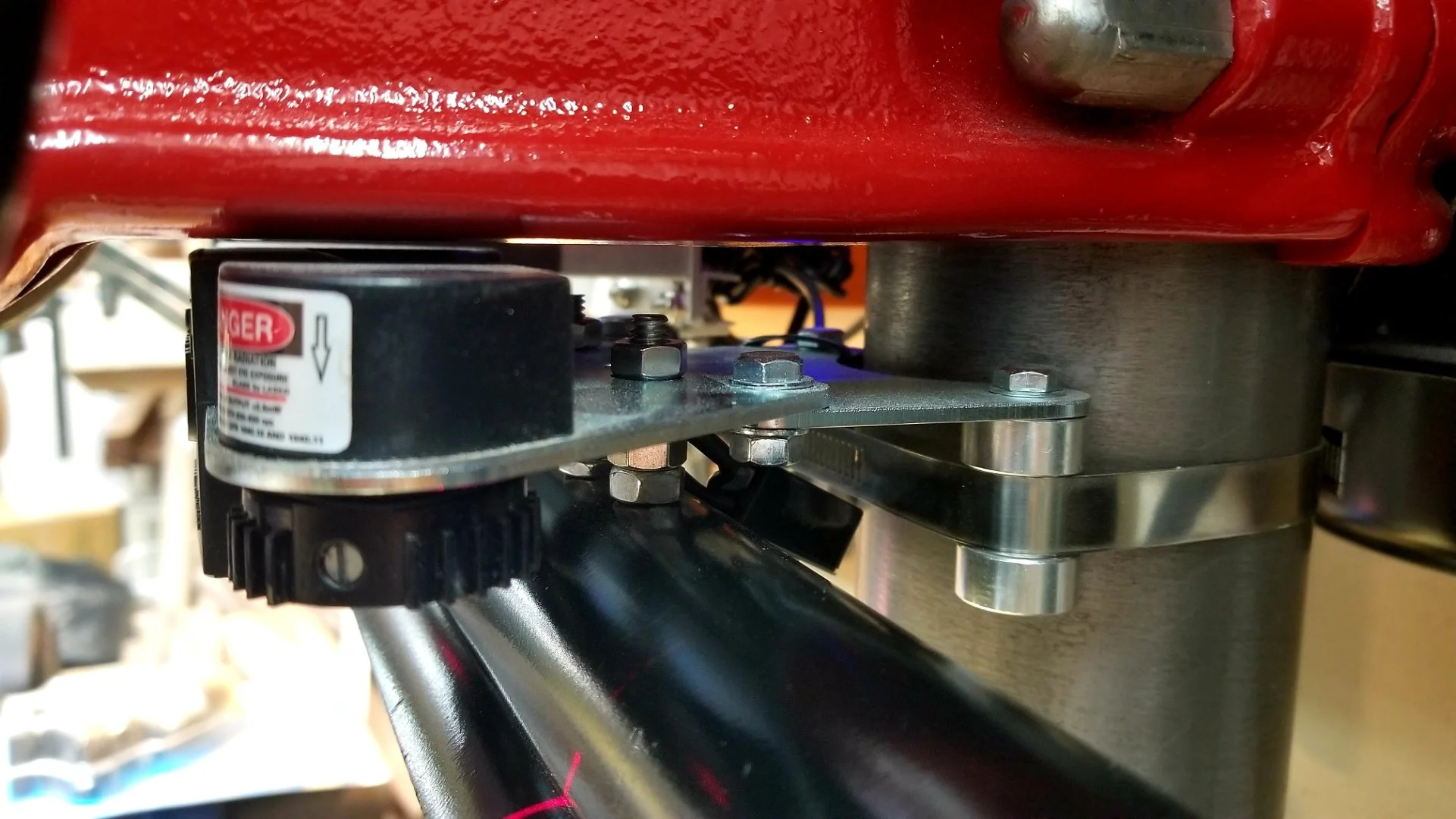
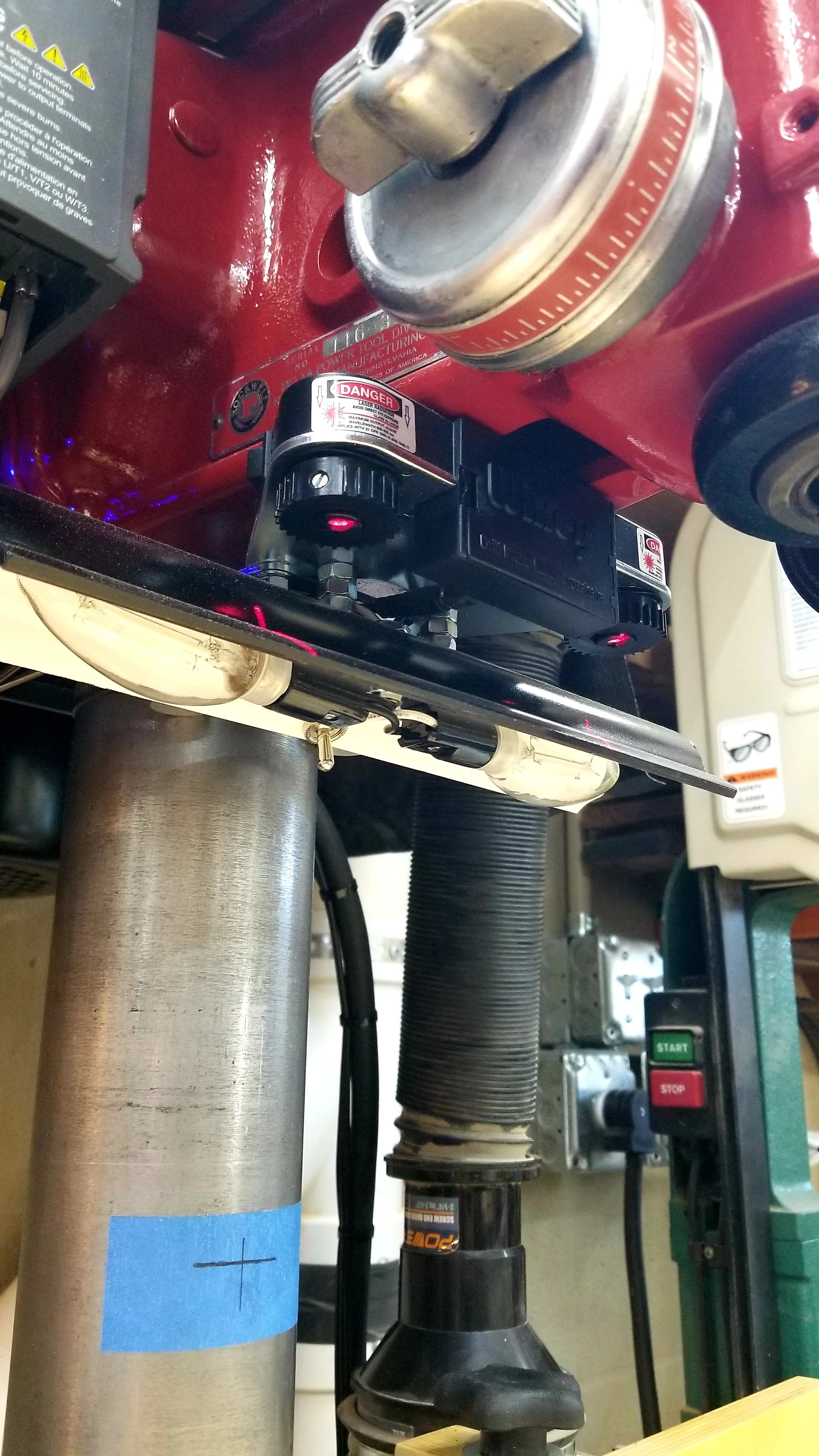
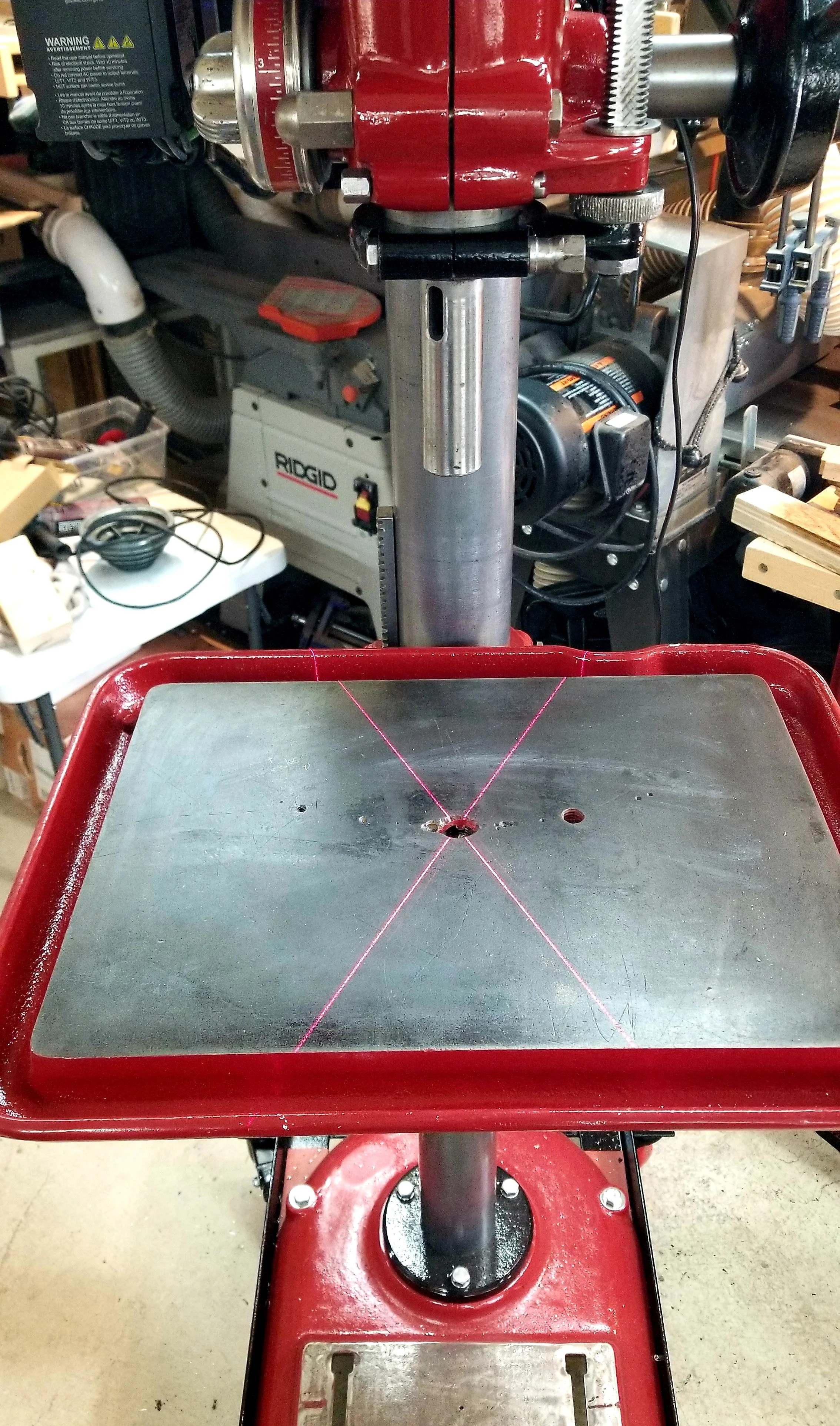
Laser Guide… Old dog, new tricks, right? I had gotten used to the laser guide on my Porter Cable drill press and went looking for something to go on this Delta. Sure enough, there’s a “universal” one being made by Wixey (Wixey Model WL133 Drill Press Laser) and I found it on Amazon. I have several Wixey measuring tools in my shop and found them to be reliable. One of the reviewers recommended replacing the 2 AAA batteries on the unit with a 3V AC-DC adapter. Brilliant! Since I needed a 120v power strip to power a work light and the tach anyway, I just plugged an adapter into that and hard wired it into the Wixey. Now everything turns on and off with a switch and the setup is perfect. The laser lines are bright enough to see, even when my work light is on, and everything powers up and down with the machine.
Tachometer… With the VFD I wanted to know the actual RPM of the spindle. I ordered an inexpensive digital tach from Amazon that uses a Hall effect sensor, basically a magnetic “pick-up” that reads a small magnet as it passes by. I drilled a hole in the bottom of the belt cover aligned with the edge of the front pulley to mount the threaded senor. Then I drilled a small indention in the bottom of the aluminum pulley along it’s edge and glued the little magnet in. I adjusted the sensor so it came close to the spinning pulley and it reads the magnet as it spins by and works perfect. The little digital readout panel is mounted above the motor VFD controller. A 70 year old machine with digital variable speed and a tach! How cool can it get?!?
Both 120v and 240v… When I was originally designing my shop I put in 240v outlets alongside all of my 120v outlets so I have plenty of circuits for all my machines no matter the voltage. When I decided that I wanted the VFD, I knew that it would need 240v single phase, so I fabricated a power cable to drive it. Then I had to source the the 12AWG 4 conductor VFD cable that would allow the VFD to power the motor. Next, I simply added a second 120v cord to plug into the wall outlet with compact power strip mounted on the machine to power everything else. I suppose I could have powered the 120v off of one leg of the 240v but I wanted a clear even signal going to the VFD. It’s a little odd to have 2 cords going to one machine but not really inconvenient and the power strip is almost completely hidden behind the VFD so now all the electronics are happy.
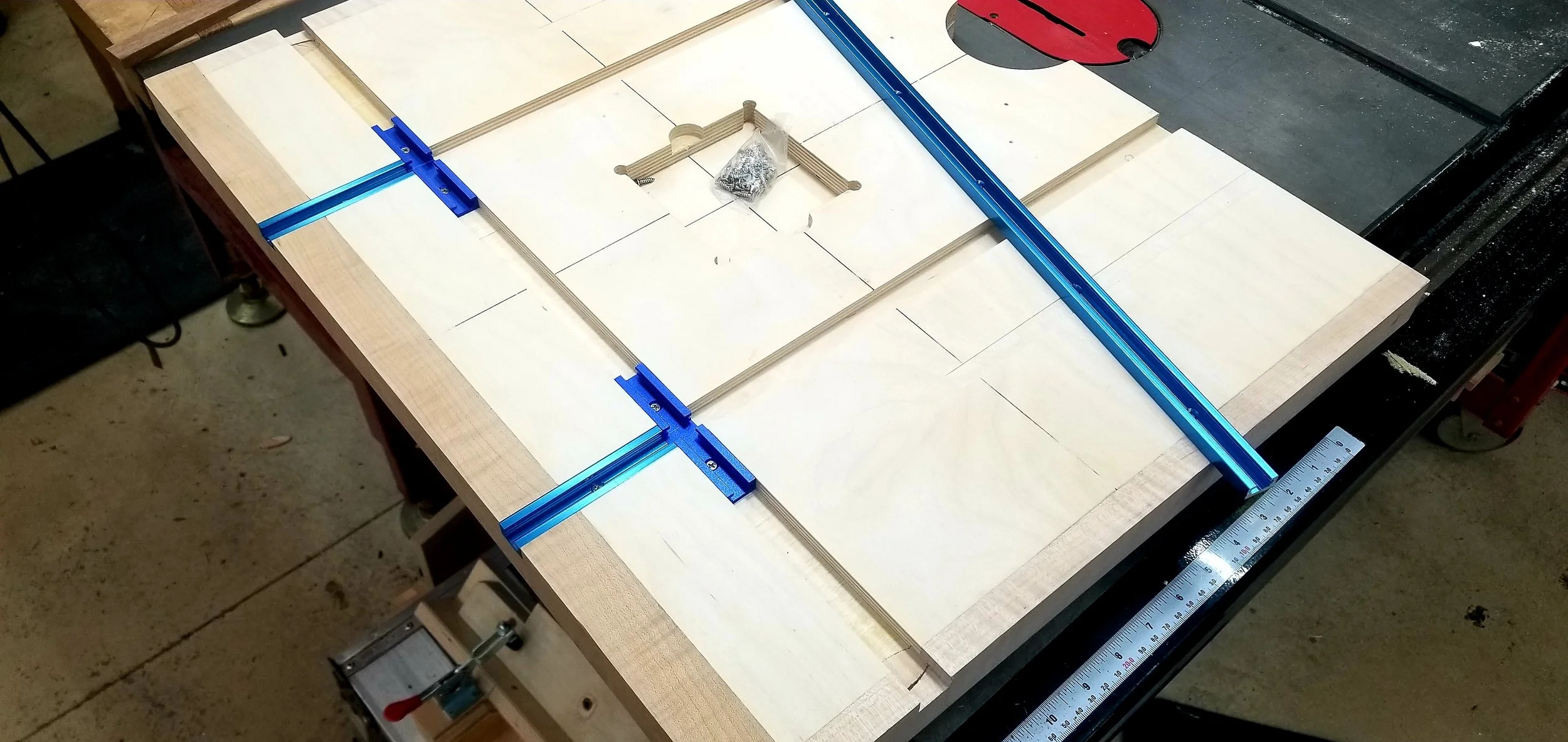
Work table… On my original drill press I had made a nice woodworking table with a fence, but after years of use and a bunch of new ideas it was time to build a new table with better features and larger size to go with this large press. I started with a double layer of 3/4” Baltic Birch, the bottom layer has threaded inserts that let me use threaded knobs to bolt the thing down to the steel table from underneath. The top layer has a cutout in the center for 4”x4” sacrificial blocks that the bits can drill into without damaging the table. I mounted adhesive backed measuring tapes in very shallow dados to measure the positions for the fence, and T-tracks to lock down the fence where needed. I also mounted an extra T-track running side to side for clamps to hold down parts. For dust collection, I attached a 4” hose to the back edge of the table with a blast gate and reducer to a semi ridged 2.5” flexible hose that I move near the bits when drilling. Over time, I have made a number over sized fences and jigs that bolt down in the T-tracks to hold specific parts. With the great vertical table adjustment of this Delta press, I can make amazingly deep and straight holes. One of my lamps has a 5/8”x 13.5”deep hole, I often drill this through walnut and quarter sawn oak with no problem. The table is one of the best features of this setup and has allowed me to increase my accuracy and capacity more than I expected.
Mobile Base… This Delta DP weighs in at around 400 lbs. but I really needed the ability to move it around easily. I had looked into buying a pre-made universal type mobile base, but few had what I was looking for and with the loads it would have to carry, made them expensive. In the end, I built what I wanted from 3”x3” medium duty angle iron welded together, and mounted heavy duty 3” locking casters. The whole frame is custom fit to the machine and the casters are mounted outboard to the sides to offer extra stability. The drill press’ massive base plate drops in on thick rubber pads and is through bolted to the mobile frame. This had the added benefit of giving additional height to the work table and room for my toes to go under the machine if I’m standing close. The whole setup is heavy and very stable, it doesn’t move at all when I’m working on it. It came out perfectly, and looks like it was part of the machine from the beginning.
Overall… This project was a lot of work, but it is by far my favorite machine in the shop and it gets used almost daily. I like to think that it’s happy being there, almost like it’s in retirement after all those years of hard work. It got a heart transplant (new quiet motor), a bath and fresh clothes (paint and polish) and new electronics for some bling, plus it lives a life of leisure with light work effort in a climate controlled environment. It’s got to love it!!!
So, if you need a really good drill press and don’t mind doing some restoration I highly recommend getting and saving one of these vintage machines. It has been very satisfying to bring this one back to life and to use it. The size, plus the accuracy improvements that it has brought to my work has made this entire project a pleasure.